Blog

  • Germany Weighs Ending Bitcoin Tax-Free Rule

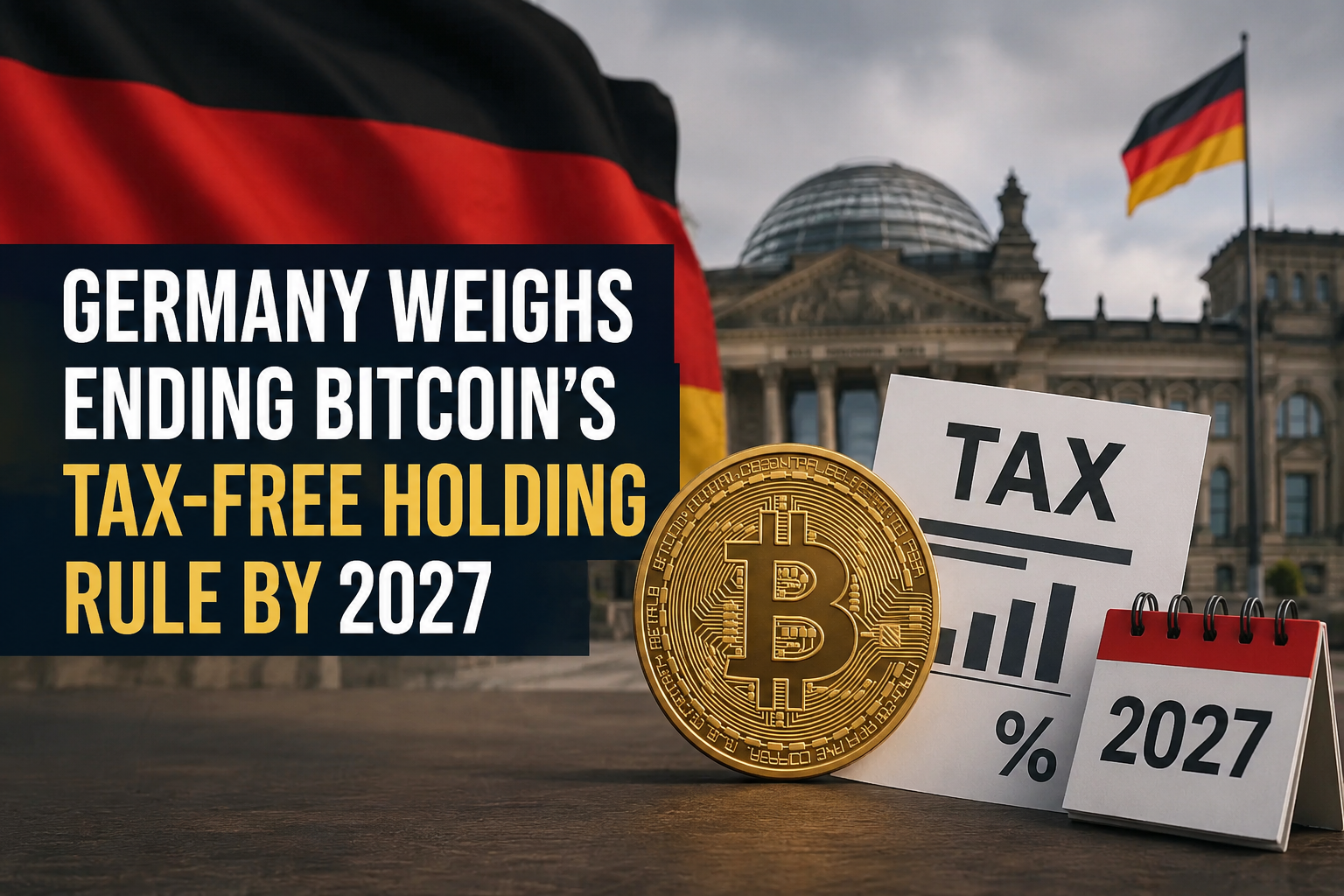
    Germany Weighs Ending Bitcoin Tax-Free Rule

    Germany has long been viewed as one of the most crypto-friendly countries in Europe because of its favorable taxation model for digital assets. Under the current framework, individuals who hold Bitcoin and other cryptocurrencies for more than one year can sell them tax-free. This policy has encouraged long-term investing, attracted crypto enthusiasts, and helped Germany build a reputation as a progressive market for blockchain innovation. However, recent discussions within political and financial circles suggest that Germany may be considering major changes to this system by 2027.

    The possibility of ending the Bitcoin tax-free holding rule has sparked intense debate among investors, financial experts, and the wider cryptocurrency community. If implemented, the proposed changes could significantly impact how German investors buy, hold, and sell digital assets. Many believe the move is connected to rising concerns over tax revenue, regulatory consistency within the European Union, and the growing mainstream adoption of cryptocurrencies.

    As Bitcoin continues to evolve from a speculative asset into a globally recognized store of value, governments around the world are revisiting their taxation models. Germany’s potential policy shift could become one of the most important crypto tax developments in Europe. The discussion goes far beyond simple taxation because it reflects how governments are adapting to the rapid rise of decentralized finance and digital wealth.

    This article explores why Germany is weighing the end of its tax-free Bitcoin holding rule, how the current system works, what changes may arrive by 2027, and what the future could mean for crypto investors, traders, and the broader blockchain economy.

    Understanding Germany’s Current Bitcoin Tax Rule

    Germany’s existing crypto tax policy is relatively simple compared to many other countries. Under current law, Bitcoin and other cryptocurrencies are treated as private assets rather than financial securities. This distinction is important because it allows individuals to benefit from a special tax exemption after holding crypto assets for more than one year.

    If an investor purchases Bitcoin and later sells it within twelve months, any profits are subject to capital gains taxation. However, if the investor keeps the Bitcoin for longer than a year, profits from the sale become completely tax-free. This rule has made Germany particularly attractive for long-term crypto investors who believe in holding digital assets rather than actively trading them.

    The tax-free approach has also encouraged financial discipline among retail investors. Instead of participating in short-term speculation, many German crypto users prefer to adopt a “buy and hold” strategy. This has contributed to Bitcoin’s growing reputation as a long-term wealth preservation asset rather than merely a volatile trading instrument.

    Over the years, Germany’s crypto-friendly stance has helped establish trust within the blockchain sector. Startups, crypto exchanges, and fintech companies have benefited from regulatory clarity, and many investors have viewed Germany as one of the safest jurisdictions for legally owning digital assets.

    However, the rapid growth of the cryptocurrency market has placed increasing pressure on regulators. As Bitcoin adoption expands and institutional investment rises, governments are beginning to question whether generous tax exemptions still make sense in a rapidly evolving financial environment.

    Why Germany Is Reconsidering the Tax-Free Bitcoin Rule

    Several factors are driving Germany’s discussion about ending the Bitcoin tax-free holding rule by 2027. One of the most significant reasons is the growing importance of cryptocurrency within the broader financial system. Bitcoin is no longer viewed solely as a niche digital asset. It has become part of mainstream investment portfolios, institutional treasury strategies, and even pension fund discussions.

    As crypto ownership grows, governments recognize that untaxed gains may represent billions in lost tax revenue. Germany, like many European nations, faces increasing fiscal pressures linked to inflation, public spending, and economic modernization. Policymakers may see crypto taxation reform as an opportunity to generate additional revenue without introducing entirely new taxes.

    Another major factor is the push for greater regulatory consistency across the European Union. Different crypto tax rules among EU member states create uneven market conditions. Some countries impose heavy taxes on crypto gains, while others provide generous exemptions. Germany’s tax-free holding policy has often been considered unusually favorable compared to neighboring nations.

    The implementation of the European Union’s Markets in Crypto-Assets regulation, commonly known as MiCA, is also influencing policy discussions. While MiCA primarily focuses on regulation rather than taxation, it reflects Europe’s broader effort to create a unified crypto framework. Germany may eventually align its tax policies with evolving EU standards.

    There is also concern among regulators that wealthy investors are disproportionately benefiting from the current system. Critics argue that allowing completely tax-free Bitcoin profits after one year creates an unfair advantage compared to traditional investments, many of which remain taxable regardless of holding duration.

    These debates have intensified as Bitcoin prices continue reaching new milestones. During major bull markets, some investors generate massive profits entirely free from taxation under current German law. This reality has become politically controversial as governments seek more balanced taxation systems.

    How the Proposed 2027 Changes Could Work

    Although Germany has not officially finalized any new crypto tax framework, several possible scenarios are being discussed. The most likely proposal involves removing the full tax exemption for long-term Bitcoin holdings while introducing a standardized capital gains tax structure.

    Under such a model, Bitcoin profits could remain taxable regardless of how long investors hold the asset. This would bring cryptocurrency closer to traditional investment taxation models used for stocks, commodities, and other financial instruments.

    Another possibility is the introduction of tiered taxation based on holding periods. Instead of complete tax exemption after one year, investors might receive reduced tax rates for long-term holdings. For example, short-term crypto trading profits could face higher taxation, while long-term investors might benefit from partial reductions.

    Some analysts also believe Germany could introduce annual tax-free profit allowances specifically for retail crypto investors. This would protect small investors while ensuring larger gains contribute to public revenue.

    The government may also expand reporting requirements for cryptocurrency transactions. Increased transparency and stricter compliance standards are already becoming common globally as regulators aim to reduce tax evasion and improve oversight within the crypto market.

    Regardless of the exact structure, any major change would likely affect investor behavior. The removal of tax-free Bitcoin gains could reduce incentives for long-term holding and encourage different trading strategies within Germany’s crypto community.

    Impact on German Bitcoin Investors

    If Germany officially ends the tax-free holding rule by 2027, the impact on investors could be substantial. Many individuals currently structure their crypto investment strategies around the one-year holding period. The possibility of future taxation may force investors to reconsider how they manage digital assets.

    Long-term Bitcoin holders could become more cautious about realizing profits. Some investors may delay selling assets, while others might move holdings into jurisdictions with more favorable tax conditions. There is also the possibility that increased taxation could temporarily reduce retail participation in the crypto market.

    At the same time, more comprehensive taxation rules could encourage greater institutional involvement. Large financial institutions often prefer clear and predictable regulatory frameworks. A standardized crypto tax system may provide additional legitimacy and stability for institutional investors entering the market.

    The psychological impact should not be underestimated either. Germany’s tax-free Bitcoin rule has become symbolic within the global crypto community. Removing it could alter public perception and reduce Germany’s reputation as a crypto-friendly nation.

    However, supporters of reform argue that fair taxation could strengthen the long-term sustainability of the crypto sector. By integrating Bitcoin more fully into the financial system, governments may help normalize cryptocurrency adoption and reduce uncertainty surrounding regulation.

    The Broader European Crypto Tax Landscape

    Germany’s potential policy shift reflects a larger trend across Europe. Governments throughout the continent are actively reviewing how cryptocurrencies should be taxed in the digital age. Some countries have already implemented strict taxation rules, while others remain relatively flexible.

    Countries like Portugal were once famous for crypto-friendly tax policies but have gradually tightened regulations. France and Spain impose various capital gains taxes on cryptocurrency profits, while other jurisdictions continue experimenting with different approaches.

    The European Union increasingly favors coordinated crypto oversight to prevent regulatory loopholes and tax arbitrage. If Germany changes its Bitcoin tax policy, it could influence other European countries to adopt similar measures.

    This broader movement highlights how cryptocurrency is becoming more integrated into mainstream finance. Early crypto adoption often benefited from regulatory uncertainty and limited oversight. As the industry matures, governments are moving toward comprehensive frameworks that treat digital assets more like traditional financial products.

    The evolution of crypto taxation also demonstrates how policymakers are balancing innovation with fiscal responsibility. Governments want to encourage technological development while ensuring tax systems remain fair and sustainable.

    Bitcoin’s Role in Modern Financial Systems

    Germany Weighs Ending Bitcoin Tax-Free Rule

    The debate over Germany’s Bitcoin tax rule also reflects Bitcoin’s changing role in the global economy. In its early years, Bitcoin was often dismissed as a speculative experiment. Today, it is increasingly viewed as a legitimate financial asset with long-term significance.

    Institutional investors, hedge funds, and even publicly traded companies now hold Bitcoin as part of treasury diversification strategies. The rise of Bitcoin exchange-traded funds has further accelerated mainstream acceptance.

    As Bitcoin gains legitimacy, governments face pressure to establish clearer rules regarding ownership, trading, and taxation. The idea of untaxed multi-million-dollar gains becomes harder to justify politically as cryptocurrencies become more deeply embedded within the financial system.

    At the same time, Bitcoin supporters argue that excessive taxation could discourage innovation and push crypto activity into less transparent markets. Many believe governments should encourage responsible crypto adoption rather than impose burdensome regulations.

    Germany’s ongoing debate highlights this delicate balance between encouraging technological progress and maintaining fair taxation systems.

    Could the Tax Change Affect Bitcoin Prices?

    While Germany alone may not determine global Bitcoin prices, changes to its crypto tax policy could influence market sentiment. Germany is one of Europe’s largest economies and an important participant in the global cryptocurrency ecosystem.

    If investors perceive the proposed changes as hostile toward crypto, short-term volatility could emerge within German markets. Some traders might accelerate sales before any new rules take effect, potentially increasing market fluctuations.

    However, Bitcoin has historically shown resilience in the face of regulatory changes. Similar fears have emerged in multiple countries over the years, yet the cryptocurrency market has continued expanding globally.

    Some analysts believe stricter taxation may actually increase Bitcoin’s legitimacy among traditional investors. Clear regulatory structures can reduce uncertainty and attract institutional capital, even if tax burdens increase.

    Ultimately, Bitcoin’s long-term value is influenced by many factors beyond taxation alone, including adoption rates, macroeconomic conditions, monetary policy, and technological innovation.

    The Future of Crypto Regulation in Germany

    Germany’s discussions about ending the tax-free Bitcoin holding rule by 2027 represent a broader transformation in how governments approach digital assets. Rather than treating cryptocurrencies as fringe investments, policymakers increasingly view them as significant components of modern financial systems.

    Future crypto regulation in Germany will likely focus on transparency, investor protection, taxation consistency, and compliance with European Union standards. Authorities may also strengthen anti-money laundering requirements and reporting obligations for exchanges and crypto service providers.

    Despite potential tax increases, Germany is unlikely to abandon its broader support for blockchain innovation. The country continues investing in fintech development, digital infrastructure, and financial modernization initiatives.

    The key challenge for regulators will be maintaining a balance between encouraging innovation and ensuring fair taxation. Excessively restrictive policies could push investment and talent elsewhere, while overly lenient systems may create political and fiscal concerns.

    The outcome of these discussions could shape Germany’s position within the global crypto economy for years to come.

    Conclusion

    Germany’s consideration of ending the Bitcoin tax-free holding rule by 2027 marks a potentially historic moment for cryptocurrency regulation in Europe. For years, the country has been regarded as a crypto-friendly destination because of its generous tax treatment for long-term Bitcoin holders. However, the rapid growth of digital assets, increasing institutional adoption, and broader European regulatory coordination are pushing policymakers toward possible reform.

    If Germany removes the one-year tax exemption, investors may face major changes in how they manage cryptocurrency portfolios. While some fear the move could weaken Germany’s appeal among crypto enthusiasts, others believe clearer and more standardized taxation could strengthen the industry’s long-term legitimacy.

    The debate ultimately reflects Bitcoin’s transformation from a niche experiment into a mainstream financial asset. As governments adapt to the digital economy, crypto taxation will remain one of the most important policy issues shaping the future of blockchain technology and decentralized finance.

    Whether the tax-free rule survives or disappears by 2027, Germany’s decision will likely influence crypto regulation far beyond its borders.

    FAQs

    Q. Will Germany completely ban tax-free Bitcoin profits by 2027?

    Germany has not finalized any official policy yet, but discussions suggest the government may replace the current one-year tax exemption with a more standardized capital gains tax system.

    Q. How does Germany currently tax Bitcoin?

    Under current rules, Bitcoin profits are tax-free if the asset is held for more than one year. Short-term gains sold within twelve months are generally taxable.

    Q. Why is Germany considering changing Bitcoin taxation?

    The government is reportedly exploring reform due to growing crypto adoption, potential tax revenue, and efforts to align with broader European Union regulatory frameworks.

    Q. Could new Bitcoin taxes affect German crypto investors?

    Yes, investors may need to adjust long-term holding strategies, portfolio management, and tax planning if Germany introduces new cryptocurrency taxation rules.

    Q. Will stricter Bitcoin taxes hurt cryptocurrency adoption?

    Some believe higher taxes could discourage retail investors, while others argue that clearer regulation may increase institutional confidence and strengthen long-term adoption.

  • Benchmark Cuts Strategy Price Target Amid Bitcoin Reset

    Benchmark Cuts Strategy Price Target Amid Bitcoin Reset

    The cryptocurrency market continues to evolve at a rapid pace. As a result, investors are reassessing the long-term outlook for major crypto-related companies. One of the biggest recent developments came when Benchmark lowered its price target for Strategy after concerns emerged that the company’s aggressive Bitcoin-focused thesis may need a major reset. This decision sparked fresh debate across financial markets and intensified discussions about the future of corporate Bitcoin adoption.

    For years, Strategy built its identity around a bold Bitcoin accumulation strategy. The company transformed from a traditional software business into one of the largest institutional holders of Bitcoin. Consequently, its stock price became heavily tied to the performance of the digital asset market. During Bitcoin rallies, investors viewed the company as a high-leverage proxy for crypto exposure. However, changing macroeconomic conditions and increasing market volatility have altered that narrative.

    Benchmark’s revised outlook reflects growing caution among analysts. While long-term optimism around Bitcoin still exists, many experts now believe the path forward may be slower and more unpredictable than previously expected. Therefore, investors are carefully evaluating the risks associated with crypto-focused equities.

    This shift has broader implications beyond a single stock downgrade. It signals a changing mood in the market. Moreover, it raises important questions about institutional crypto adoption, corporate treasury strategies, and the sustainability of highly concentrated Bitcoin exposure.

    Why Benchmark Cut Strategy’s Price Target

    Benchmark’s decision to reduce its valuation target did not happen in isolation. Instead, it followed a broader reassessment of crypto market expectations and investor sentiment. Analysts noted that the original bullish assumptions surrounding Strategy relied heavily on sustained Bitcoin appreciation. Since market conditions have changed dramatically, those assumptions are now under pressure.

    The company’s stock performance has historically mirrored Bitcoin price movements. Whenever Bitcoin surged, Strategy shares often outperformed the broader market. Nevertheless, this dependence also created substantial downside risk. As Bitcoin volatility increased, investors became more cautious about companies with concentrated exposure to digital assets.

    Benchmark highlighted concerns surrounding valuation multiples and future growth projections. Analysts argued that the previous price target assumed a stronger and faster crypto recovery. However, persistent economic uncertainty and tighter financial conditions forced a more conservative outlook.

    Additionally, investor enthusiasm around speculative assets has weakened. Rising interest rates and global economic concerns have shifted capital toward safer investments. Consequently, companies closely tied to cryptocurrency markets face stronger scrutiny from Wall Street analysts.

    The Bitcoin Thesis That Defined Strategy

    Strategy became widely recognized because of its aggressive Bitcoin acquisition strategy. The company consistently purchased Bitcoin during market dips and frequently promoted the cryptocurrency as superior to traditional cash reserves. This approach attracted both institutional investors and retail traders seeking indirect Bitcoin exposure.

    The original thesis centered on the belief that Bitcoin would become a global store of value. Supporters argued that limited supply and growing institutional demand would drive prices significantly higher over time. Therefore, Strategy positioned itself as a corporate pioneer in digital asset adoption.

    The company’s leadership repeatedly emphasized confidence in Bitcoin’s long-term future. Furthermore, it used debt financing and equity offerings to expand its Bitcoin holdings. During bullish periods, this strategy generated enormous gains and strengthened investor confidence.

    However, the market environment has changed considerably. Bitcoin remains highly volatile, and investors now demand clearer profitability metrics and risk management practices. As a result, some analysts believe the company’s original thesis requires recalibration.

    How Bitcoin Market Conditions Changed

    The crypto market has experienced several major shifts over the past few years. Initially, institutional adoption and low interest rates fueled unprecedented Bitcoin growth. Investors poured money into digital assets, expecting continued expansion and mainstream acceptance.

    Eventually, macroeconomic pressures began reshaping the investment landscape. Central banks increased interest rates to combat inflation. Consequently, speculative assets such as cryptocurrencies experienced significant sell-offs.

    Bitcoin also faced increased regulatory scrutiny worldwide. Governments introduced stricter compliance requirements, while some regulators questioned the stability of digital asset ecosystems. This uncertainty negatively affected investor sentiment and slowed institutional participation.

    Moreover, the collapse of several crypto firms damaged confidence across the market. Investors became more cautious about leverage, liquidity, and risk exposure. Therefore, companies with heavy Bitcoin concentration faced additional pressure.

    Despite these challenges, Bitcoin still maintains strong long-term supporters. Many investors continue viewing it as a hedge against inflation and currency debasement. Nevertheless, the market now appears more mature and selective compared to previous bull cycles.

    Investor Sentiment Around Crypto Stocks

    Investor sentiment toward crypto-related stocks has become increasingly mixed. During the peak of the crypto boom, companies associated with Bitcoin often traded at massive premiums. Traders expected explosive future growth and rapid institutional adoption.

    Now, sentiment has become far more balanced. Investors focus more heavily on fundamentals, profitability, and sustainability. Consequently, companies relying primarily on Bitcoin appreciation face greater skepticism.

    Strategy remains one of the most closely watched crypto-linked equities. Its performance often reflects broader market confidence in digital assets. Therefore, Benchmark’s revised target attracted significant attention across Wall Street.

    Some investors still view the stock as an attractive long-term opportunity. They believe future Bitcoin adoption could eventually justify higher valuations. However, others worry about downside risks if crypto markets remain weak for extended periods.

    This divide highlights a broader transition within the crypto investment landscape. Market participants are no longer driven solely by hype. Instead, they increasingly evaluate risk-adjusted returns and long-term financial stability.

    Institutional Bitcoin Adoption Faces New Challenges

    Institutional adoption once represented the strongest bullish argument for Bitcoin growth. Large corporations, hedge funds, and financial institutions gradually entered the crypto space. Consequently, many analysts predicted sustained long-term demand.

    However, institutional participation has become more cautious recently. Regulatory uncertainty and market volatility have slowed adoption rates. Additionally, some firms experienced substantial losses after entering crypto markets during bullish periods.

    Strategy’s situation illustrates the challenges associated with institutional Bitcoin exposure. While aggressive accumulation generated attention and growth during bull markets, it also increased vulnerability during downturns.

    Companies considering similar treasury strategies now face difficult decisions. On one hand, Bitcoin offers diversification and long-term growth potential. On the other hand, extreme volatility can negatively affect shareholder confidence and balance sheet stability.

    As a result, many corporations now prefer limited or measured exposure instead of aggressive accumulation strategies.

    The Impact of Macroeconomic Pressure on Bitcoin

    Macroeconomic conditions play a critical role in shaping Bitcoin performance. During periods of low interest rates and abundant liquidity, investors often seek higher-risk assets with strong growth potential. Bitcoin benefited enormously from this environment.

    Today, conditions are very different. Central banks continue maintaining tighter monetary policies. Consequently, borrowing costs remain elevated, and investor appetite for speculative assets has weakened.

    Inflation concerns also influence market behavior. While Bitcoin supporters often describe the cryptocurrency as digital gold, its price movements frequently resemble high-risk technology stocks. Therefore, economic uncertainty can trigger large sell-offs.

    Additionally, geopolitical tensions and slowing economic growth have created broader market instability. Investors increasingly prioritize capital preservation over aggressive growth strategies.

    These macroeconomic realities contributed to Benchmark’s more cautious outlook on Strategy. Analysts believe the company’s future performance depends heavily on broader economic conditions alongside Bitcoin price action.

    Can Strategy Recover Investor Confidence?

    Despite the downgrade, many investors still believe Strategy has recovery potential. The company maintains one of the largest institutional Bitcoin holdings in the world. Therefore, a strong Bitcoin rally could quickly improve market sentiment.

    Leadership confidence also remains strong. Company executives continue supporting Bitcoin’s long-term value proposition. Moreover, loyal shareholders view temporary volatility as part of the broader crypto adoption cycle.

    However, rebuilding investor confidence may require a more balanced strategy moving forward. Investors increasingly expect stronger operational performance from the company’s core software business. They also want improved transparency regarding financial risk exposure.

    Diversification could become another important factor. If Strategy reduces reliance on Bitcoin appreciation alone, analysts may adopt a more favorable long-term outlook.

    Ultimately, investor confidence will likely depend on both Bitcoin market recovery and the company’s ability to demonstrate sustainable growth beyond crypto exposure.

    The Future of Corporate Bitcoin Strategies

    The debate surrounding corporate Bitcoin adoption is far from over. Some companies still believe Bitcoin offers strategic advantages, especially in environments characterized by currency debasement and inflation concerns.

    Nevertheless, Strategy’s experience highlights the importance of risk management. Aggressive Bitcoin concentration can generate extraordinary returns during bull markets. Yet it can also expose companies to significant volatility during downturns.

    Future corporate adoption may become more conservative. Instead of allocating massive portions of treasury reserves to Bitcoin, companies may choose smaller, diversified positions.

    Regulatory clarity could also influence adoption trends. If governments establish clearer digital asset frameworks, institutional participation may accelerate again. Conversely, stricter regulations could discourage aggressive exposure.

    The next phase of corporate crypto adoption will likely focus on sustainability, governance, and balanced portfolio management rather than purely speculative growth.

    Bitcoin’s Long-Term Outlook Still Matters
    Benchmark Cuts Strategy Price Target Amid Bitcoin Reset

    Although Benchmark lowered its price target, the long-term Bitcoin debate remains active. Supporters argue that short-term volatility does not invalidate the broader thesis surrounding digital scarcity and decentralized finance.

    Bitcoin continues attracting global attention from investors, institutions, and policymakers. Furthermore, ongoing blockchain innovation keeps the cryptocurrency ecosystem highly relevant.

    Some analysts believe Bitcoin could still achieve new all-time highs in future market cycles. They point to growing mainstream awareness and increasing integration into financial infrastructure.

    However, expectations have become more realistic. Investors now recognize that crypto markets experience extended cycles of boom and correction. Therefore, long-term success requires patience and disciplined risk management.

    Strategy’s future will remain closely tied to these broader market dynamics. If Bitcoin regains strong upward momentum, the company could benefit substantially. Yet if volatility persists, investor caution may continue dominating sentiment.

    Market Reactions to the Price Target Reduction

    Financial markets reacted quickly after Benchmark announced its revised outlook. Traders interpreted the downgrade as a signal that Wall Street is becoming more cautious about crypto-linked equities.

    Some investors viewed the decision as a temporary adjustment rather than a long-term bearish signal. Others considered it evidence that institutional confidence in aggressive Bitcoin strategies is weakening.

    Market analysts also debated whether the stock had become too dependent on Bitcoin performance. Many believe diversified revenue streams are increasingly important in uncertain economic environments.

    At the same time, crypto supporters criticized the downgrade, arguing that short-term market conditions should not overshadow Bitcoin’s long-term potential. They believe institutional adoption will continue expanding over time despite temporary setbacks.

    This divide reflects the ongoing tension between traditional finance perspectives and crypto-focused investment philosophies.

    Conclusion

    Benchmark’s decision to cut Strategy’s price target represents more than a simple analyst downgrade. It reflects a broader reassessment of the Bitcoin investment narrative in an evolving financial environment. While the company remains deeply committed to its Bitcoin strategy, changing market conditions have forced investors and analysts to reconsider previous assumptions.

    The crypto market continues maturing, and investor expectations are shifting toward sustainability, profitability, and balanced risk management. Although Bitcoin still holds strong long-term potential, volatility and macroeconomic uncertainty remain major challenges.

    Strategy now stands at an important crossroads. Its future success will depend not only on Bitcoin performance but also on its ability to adapt to changing investor expectations. As institutional crypto adoption evolves, the company’s experience could serve as a valuable lesson for corporations exploring digital asset strategies.

    Ultimately, the debate surrounding Bitcoin’s future is far from settled. However, one thing remains clear: market participants are entering a more cautious and disciplined phase of crypto investing.

    FAQs

    Q. Why did Benchmark cut Strategy’s price target?

    Benchmark reduced the price target because analysts believe changing market conditions and increased Bitcoin volatility require more conservative growth expectations for Strategy.

    Q. How is Strategy connected to Bitcoin?

    Strategy holds a massive amount of Bitcoin on its balance sheet. Therefore, its stock performance is heavily influenced by Bitcoin price movements.

    Q. Does the downgrade mean Bitcoin is failing?

    No, the downgrade does not mean Bitcoin is failing. Instead, it reflects concerns about short-term market conditions and the risks associated with concentrated crypto exposure.

    Q. Can Strategy stock recover in the future?

    Yes, Strategy could recover if Bitcoin prices rise significantly and the company improves investor confidence through stronger operational performance and better risk management.

    Q. What does this mean for corporate Bitcoin adoption?

    The situation suggests that future corporate Bitcoin adoption may become more cautious and balanced, with companies focusing more on diversification and risk control.

  • Robinhood Backs Wall Street’s Crypto Shift

    Robinhood Backs Wall Street’s Crypto Shift

    The global cryptocurrency market has matured at a remarkable pace during the last few years. Digital assets once existed on the edge of mainstream finance. Today, however, they influence banking, investing, payments, and institutional trading. Even with growing adoption, many traditional financial institutions continue to move carefully into the crypto space. Recently, Robinhood defended Wall Street’s gradual approach to crypto adoption, arguing that caution may ultimately strengthen the long-term future of digital finance.

    The discussion around Wall Street’s slow crypto pivot has intensified as retail investors push for broader access to Bitcoin, Ethereum, tokenized assets, and decentralized finance tools. Meanwhile, large banks and investment firms remain focused on compliance, security, and regulation before fully embracing digital assets. According to Robinhood executives, this measured pace reflects the complexity of integrating crypto into the existing financial ecosystem rather than resistance to innovation.

    The debate highlights an important turning point for the financial industry. On one side, crypto enthusiasts want faster adoption and fewer barriers. On the other side, institutional players seek stability and legal clarity before committing billions of dollars to blockchain technology. Robinhood’s defense of Wall Street’s cautious crypto strategy reveals how the industry may evolve during the coming years.

    As crypto markets continue to grow, investors increasingly want to understand why traditional finance remains hesitant. More importantly, they want to know whether slow adoption will help or hurt the future of digital assets. Understanding this balance is essential because the relationship between Wall Street and crypto could shape global finance for decades.

    Why Robinhood Supports a Measured Crypto Expansion

    Robinhood believes that rapid expansion without proper safeguards could damage investor confidence. The company argues that financial institutions operate under strict regulations that require careful planning before introducing crypto-related products. While crypto startups often move quickly, banks and brokerages face different legal and operational responsibilities.

    The company also points out that institutional adoption requires secure infrastructure, regulatory approval, and customer protection systems. These elements take time to develop. Therefore, Robinhood sees Wall Street’s slow crypto pivot as a practical response rather than unnecessary hesitation.

    Additionally, many traditional firms remember the volatility and collapses that affected the crypto market in recent years. Several exchanges failed, billions of dollars disappeared, and regulators increased scrutiny across multiple jurisdictions. Consequently, major financial firms now prioritize risk management before expanding deeper into digital assets.

    Robinhood’s position reflects a broader industry trend. Many companies want exposure to blockchain innovation, but they also want sustainable growth. This balanced approach may eventually encourage wider adoption among mainstream investors who remain skeptical about crypto markets.

    The Evolution of Wall Street’s Relationship With Crypto

    Wall Street originally dismissed cryptocurrency as a speculative trend with limited long-term value. Early critics described Bitcoin as unstable, risky, and unsuitable for institutional investing. However, the market changed dramatically as cryptocurrencies gained global attention and institutional capital began entering the sector.

    Large firms eventually recognized that blockchain technology could transform payments, settlement systems, and asset ownership. As a result, investment banks started exploring crypto custody services, Bitcoin ETFs, tokenization platforms, and blockchain partnerships.

    Despite growing interest, adoption remains slower than many crypto advocates expected. Traditional finance institutions still operate within rigid frameworks designed for conventional assets. Unlike decentralized crypto platforms, banks must satisfy regulators, shareholders, and compliance departments before launching new products.

    Robinhood argues that this slow transition should not be interpreted as rejection. Instead, the company believes Wall Street is carefully building a foundation for long-term crypto integration. That process may appear frustrating to retail traders, but it could reduce systemic risks in the future.

    Regulatory Pressure Is Slowing Crypto Adoption

    One of the biggest reasons behind Wall Street’s cautious crypto pivot is regulatory uncertainty. Financial institutions face significant legal risks when entering the crypto industry. Governments around the world continue to debate how digital assets should be classified and supervised.

    In the United States, regulators have intensified oversight of crypto exchanges, token issuers, and staking platforms. This uncertain environment creates hesitation among banks and investment firms that want clear rules before expanding crypto operations.

    Robinhood emphasized that regulatory clarity remains essential for mainstream adoption. Without consistent policies, financial institutions may struggle to build compliant crypto services. Furthermore, sudden enforcement actions could expose firms to financial and reputational damage.

    At the same time, regulators worry about money laundering, fraud, consumer protection, and market manipulation. These concerns encourage stricter oversight, which naturally slows institutional expansion into crypto markets.

    Nevertheless, many experts believe regulation could eventually strengthen the industry. Clear frameworks may attract institutional capital and improve public trust. Robinhood appears to support this view by encouraging gradual growth instead of unchecked expansion.

    Retail Investors Want Faster Innovation

    Although Wall Street remains cautious, retail investors continue pushing for faster crypto innovation. Millions of traders entered the market during recent crypto bull runs. Many younger investors now expect seamless access to digital assets through traditional investment platforms.

    Robinhood itself became popular partly because it simplified crypto trading for everyday users. Customers increasingly want integrated services that combine stocks, ETFs, crypto, and decentralized finance features within a single platform.

    This growing demand places pressure on traditional financial institutions. Retail investors see blockchain technology as the future of finance and often criticize banks for moving too slowly. Some traders believe Wall Street fears disruption from decentralized systems that reduce reliance on intermediaries.

    However, Robinhood argues that rapid innovation without safeguards could expose investors to significant risks. The company believes balancing innovation with protection is essential for sustainable market growth.

    This tension between speed and stability continues shaping the future of crypto adoption. While retail users seek immediate access to new technologies, institutions focus on security, compliance, and operational resilience.

    How Institutional Investors Are Changing the Crypto Market

    Institutional participation has transformed the cryptocurrency industry during the last several years. Hedge funds, asset managers, pension funds, and corporations now hold digital assets as part of broader investment strategies. This shift increased market legitimacy and attracted mainstream attention.

    However, institutional investors behave differently from retail traders. They prioritize long-term stability, liquidity, and regulatory compliance rather than short-term speculation. Consequently, they often prefer gradual expansion into crypto markets.

    Robinhood highlighted that institutional investors require reliable infrastructure before committing significant capital. Secure custody systems, transparent reporting standards, and regulated investment vehicles remain critical for institutional growth.

    The approval of Bitcoin exchange-traded funds marked an important milestone for Wall Street’s crypto pivot. ETFs gave traditional investors easier access to Bitcoin exposure without directly managing digital wallets or private keys. This development showed how conventional finance and crypto markets could gradually merge.

    Even so, institutions continue approaching crypto cautiously. Many firms still treat digital assets as experimental investments rather than core portfolio holdings. Robinhood believes this careful approach may help stabilize the market over time.

    The Role of Bitcoin and Ethereum in Mainstream Finance

    Bitcoin and Ethereum remain central to Wall Street’s crypto strategy. These two cryptocurrencies dominate institutional discussions because they offer the strongest liquidity, infrastructure, and market recognition.

    Bitcoin increasingly serves as a digital store of value. Many investors compare it to gold due to its limited supply and decentralized structure. Meanwhile, Ethereum powers decentralized applications, smart contracts, and tokenization projects across the blockchain ecosystem.

    Robinhood supports broader access to both assets while acknowledging the importance of investor education. The company believes crypto adoption should involve transparency and responsible risk management.

    Traditional financial institutions also favor Bitcoin and Ethereum because regulators appear more comfortable with established cryptocurrencies than smaller speculative tokens. This preference contributes to the slow pace of crypto integration since institutions avoid high-risk assets with uncertain legal status.

    As blockchain technology evolves, Bitcoin and Ethereum may become foundational components of mainstream finance. Their growing acceptance could eventually accelerate Wall Street’s crypto pivot.

    Tokenization Could Accelerate Wall Street’s Crypto Transition

    One of the most promising developments in digital finance involves tokenization. This process converts real-world assets into blockchain-based digital tokens that can be traded more efficiently. Tokenization has attracted attention from banks, asset managers, and fintech companies worldwide.

    Robinhood believes tokenization could bridge the gap between traditional finance and crypto markets. Instead of replacing Wall Street, blockchain technology may improve existing systems by reducing costs and increasing efficiency.

    Financial institutions are already exploring tokenized stocks, bonds, real estate, and commodities. These innovations could streamline settlement processes and improve liquidity across multiple asset classes.

    However, tokenization also requires clear legal frameworks and technological standards. Institutions cannot fully embrace tokenized assets until regulators establish consistent rules regarding ownership rights, custody, and compliance.

    Even with these challenges, tokenization represents a major opportunity for the financial industry. Robinhood’s support for gradual adoption reflects the belief that sustainable innovation requires careful implementation.

    Crypto Volatility Still Concerns Traditional Finance
    Robinhood Backs Wall Street’s Crypto Shift

    Volatility remains one of the biggest obstacles preventing faster institutional crypto adoption. Cryptocurrency prices often experience dramatic swings within short periods. This instability creates challenges for banks, pension funds, and conservative investors.

    Robinhood acknowledged that volatility discourages many institutions from expanding aggressively into crypto markets. Traditional finance firms typically prioritize predictable returns and risk management. Consequently, they hesitate to embrace highly volatile assets.

    The collapse of several major crypto firms also reinforced concerns about market stability. Investors lost confidence after witnessing bankruptcies, liquidity crises, and fraud scandals within the digital asset industry.

    Nevertheless, Robinhood argues that volatility may decrease as institutional participation grows. Increased liquidity, regulatory oversight, and mainstream adoption could eventually stabilize crypto markets.

    The company believes long-term development matters more than short-term speculation. Therefore, gradual institutional integration may help create a healthier digital asset ecosystem.

    Robinhood’s Position in the Crypto Industry

    Robinhood occupies a unique position between retail crypto traders and traditional financial institutions. The platform combines elements of modern fintech innovation with regulatory compliance expected in mainstream finance.

    Over the years, Robinhood expanded its crypto offerings to meet rising customer demand. Users can now trade several major cryptocurrencies directly through the platform. This accessibility helped introduce millions of new investors to digital assets.

    At the same time, Robinhood maintains a relatively cautious approach compared to some crypto-native exchanges. The company emphasizes compliance, security, and customer protection while avoiding overly aggressive expansion.

    This balanced strategy explains why Robinhood defends Wall Street’s slow crypto pivot. The company understands the importance of innovation, but it also recognizes the risks associated with uncontrolled growth.

    Robinhood’s perspective may resonate with investors who want crypto exposure without extreme speculation or regulatory uncertainty.

    The Future of Wall Street and Crypto Integration

    The relationship between Wall Street and crypto will likely continue evolving during the next decade. Institutional adoption appears inevitable, but the pace may remain slower than many crypto enthusiasts expect.

    Robinhood believes gradual integration could produce stronger long-term outcomes for investors and financial markets. By building secure infrastructure and complying with regulations, institutions may create a more stable foundation for digital finance.

    Several trends could accelerate this transition in the coming years. Regulatory clarity may encourage broader participation from banks and investment firms. Tokenization could modernize traditional financial systems. Additionally, growing demand from younger investors may pressure institutions to expand crypto services more aggressively.

    Still, challenges remain. Cybersecurity risks, regulatory conflicts, and market volatility continue creating uncertainty. Financial institutions must balance innovation with responsibility while adapting to rapidly changing technologies.

    Robinhood’s defense of Wall Street’s cautious approach reflects the complexity of this transformation. The company believes sustainable growth matters more than rapid expansion driven by hype.

    Conclusion

    Robinhood’s defense of Wall Street’s slow crypto pivot highlights the growing intersection between traditional finance and digital assets. While many crypto enthusiasts want faster adoption, institutional investors remain focused on regulation, security, and long-term stability. This cautious approach may frustrate retail traders, yet it could also reduce systemic risks and strengthen market confidence over time.

    The crypto industry has evolved far beyond its early experimental phase. Bitcoin, Ethereum, tokenization, and blockchain technology now influence major financial discussions worldwide. However, integrating these innovations into traditional finance requires careful planning and regulatory clarity.

    Robinhood argues that sustainable growth should take priority over rapid expansion. The company believes Wall Street’s measured crypto strategy reflects the realities of operating within a highly regulated financial system. As institutional adoption continues increasing, the partnership between crypto and traditional finance may eventually reshape global markets.

    The future of crypto integration will likely depend on balancing innovation with investor protection. If regulators, fintech companies, and financial institutions collaborate effectively, the next phase of digital finance could become more stable, accessible, and trusted by mainstream investors.

    FAQs

    Q. Why is Wall Street slow to adopt crypto?

    Wall Street moves slowly because financial institutions must comply with strict regulations, manage risks carefully, and protect investors. Banks and investment firms require secure infrastructure before fully embracing crypto assets.

    Q. Why does Robinhood support a cautious crypto strategy?

    Robinhood believes gradual adoption reduces risks and improves long-term market stability. The company argues that sustainable growth is more important than rapid expansion driven by speculation.

    Q. What role do Bitcoin and Ethereum play in institutional adoption?

    Bitcoin and Ethereum dominate institutional interest because they offer stronger liquidity, broader recognition, and more established infrastructure compared to smaller cryptocurrencies.

    Q. How could regulation affect crypto markets?

    Clear regulations may increase institutional confidence and attract more investment into crypto markets. However, excessive or unclear rules could slow innovation and adoption.

    Q. What is tokenization in finance?

    Tokenization converts real-world assets like stocks, bonds, or real estate into blockchain-based digital tokens. This process can improve efficiency, liquidity, and accessibility within financial markets.

  • Anchorage Digital AI Banking for Autonomous Payments

    Anchorage Digital AI Banking for Autonomous Payments

    The financial industry is undergoing a transformative shift as artificial intelligence continues to redefine how transactions are executed, monitored, and optimized. In a bold step toward the future, Anchorage Digital has introduced AI banking for autonomous payments, signaling a new era of intelligent financial systems. This innovation blends cutting-edge machine learning with secure digital asset infrastructure, enabling systems to make payments independently without constant human intervention.

    As global markets demand faster, more efficient, and highly secure financial solutions, the emergence of AI-powered banking is not just a trend—it is a necessity. Businesses and individuals alike are seeking smarter tools to handle transactions, reduce operational friction, and improve decision-making. Anchorage Digital’s initiative positions itself at the intersection of AI-driven finance, blockchain technology, and autonomous payment systems, offering a glimpse into what the next generation of banking could look like.

    This article explores how Anchorage Digital launches AI banking for autonomous payments, the technology behind it, its benefits, challenges, and the broader implications for the financial ecosystem.

    The Evolution of Digital Banking and AI Integration

    From Traditional Banking to Intelligent Systems

    Banking has evolved significantly over the past few decades, transitioning from manual processes to digital platforms and now to intelligent automation. Traditional banking relied heavily on human oversight, paperwork, and time-consuming verification processes. The introduction of online banking streamlined operations, but it still required active user participation.

    With the rise of artificial intelligence in finance, the landscape has shifted toward automation and predictive capabilities. AI systems can analyze vast amounts of data in real time, detect anomalies, and execute decisions faster than any human operator. Anchorage Digital’s AI banking solution builds upon this evolution by enabling self-executing financial transactions, reducing reliance on manual inputs.

    The Role of Machine Learning in Financial Automation

    Machine learning algorithms play a central role in enabling autonomous payments. These systems learn from historical transaction data, user behavior, and market trends to make informed decisions. By integrating smart financial automation, Anchorage Digital ensures that payments are not only executed automatically but also optimized for timing, cost, and security.

    This shift represents a move toward intelligent banking infrastructure, where systems can anticipate needs, manage liquidity, and handle recurring or conditional payments without direct human intervention.

    What Is AI Banking for Autonomous Payments?
    Anchorage Digital AI Banking for Autonomous Payments

    Defining Autonomous Payments

    Autonomous payments refer to financial transactions that are initiated, processed, and completed by AI systems without requiring manual approval for each step. These systems operate based on predefined rules, real-time data analysis, and adaptive learning models.

    Anchorage Digital launches AI banking for autonomous payments with the goal of creating a seamless financial ecosystem where machines can handle routine and complex transactions efficiently. This includes everything from recurring payments and payroll processing to dynamic treasury management and cross-border transfers.

    Key Components of AI Banking Systems

    The foundation of AI banking lies in the integration of several advanced technologies. These include blockchain-based security protocols, machine learning algorithms, and real-time data analytics. Together, they create a robust environment where transactions are secure, transparent, and highly efficient.

    Anchorage Digital leverages its expertise in digital asset custody to ensure that autonomous payments are not only fast but also compliant with regulatory standards. This combination of secure digital asset management and AI-driven automation sets a new benchmark for modern banking solutions.

    How Anchorage Digital Is Leading the Innovation

    A Strategic Approach to AI Integration

    Anchorage Digital has positioned itself as a pioneer in the digital finance space by embracing AI-driven solutions early. Its approach to launching AI banking for autonomous payments focuses on combining security, scalability, and intelligence.

    By integrating AI-powered financial tools with its existing infrastructure, Anchorage Digital enables institutions to automate complex workflows while maintaining full control and transparency. This approach ensures that businesses can adopt autonomous systems without compromising on compliance or risk management.

    Enhancing Security Through Intelligent Systems

    Security remains a top priority in any financial system, and AI banking is no exception. Anchorage Digital uses advanced algorithms to detect fraudulent activities, monitor transaction patterns, and respond to threats in real time.

    The incorporation of predictive analytics in banking allows the system to identify potential risks before they materialize. This proactive approach enhances trust and reliability, making autonomous payments a viable solution for both individuals and enterprises.

    Benefits of AI Banking for Autonomous Payments

    Increased Efficiency and Speed

    One of the most significant advantages of AI banking is the speed at which transactions can be processed. Autonomous systems eliminate delays caused by manual approvals, enabling near-instantaneous payments.

    This efficiency is particularly beneficial for businesses that handle high volumes of transactions. By adopting automated financial workflows, companies can reduce operational costs and improve overall productivity.

    Improved Accuracy and Reduced Errors

    Human errors in financial transactions can lead to costly mistakes. AI systems minimize these risks by executing tasks with precision and consistency. Anchorage Digital’s solution ensures that payments are processed accurately, reducing the likelihood of discrepancies.

    The use of intelligent transaction processing further enhances accuracy by continuously learning and adapting to new data inputs.

    Enhanced Financial Decision-Making

    AI banking systems provide valuable insights through data analysis, enabling better decision-making. Businesses can leverage these insights to optimize cash flow, manage risks, and identify growth opportunities.

    With data-driven financial strategies, organizations can make informed decisions that align with their long-term goals.

    Challenges and Considerations

    Regulatory and Compliance Issues

    Despite its advantages, AI banking faces several challenges, particularly in terms of regulation. Financial authorities are still adapting to the rapid pace of technological innovation, and compliance requirements can vary across jurisdictions.

    Anchorage Digital must navigate these complexities to ensure that its autonomous payment systems adhere to legal standards. This involves continuous monitoring and updates to align with evolving regulations.

    Ethical Concerns and Trust

    The idea of machines making financial decisions raises ethical questions about accountability and transparency. Users need assurance that AI systems will act in their best interests.

    Building trust requires clear communication, robust safeguards, and ongoing oversight. Anchorage Digital addresses these concerns by implementing transparent AI governance frameworks and maintaining human oversight where necessary.

    Technical Limitations

    While AI technology has advanced significantly, it is not without limitations. Systems can be affected by data quality issues, algorithmic biases, and unforeseen scenarios.

    To mitigate these risks, Anchorage Digital employs continuous testing and refinement of its models, ensuring that its AI-driven banking solutions remain reliable and effective.

    The Future of Autonomous Payments

    A Shift Toward Fully Automated Financial Ecosystems

    The launch of AI banking for autonomous payments marks the beginning of a broader in the financial sector. As technology continues to evolve, we can expect to see more institutions adopting similar solutions.

    This shift will lead to the development of fully automated financial ecosystems, where transactions, investments, and risk management are handled by intelligent systems.

    Integration with Emerging Technologies

    AI banking is likely to integrate with other emerging technologies such as the Internet of Things (IoT) and decentralized finance (DeFi). This convergence will create new opportunities for innovation and efficiency.

    For example, IoT devices could trigger payments automatically based on usage data, while DeFi platforms could enable decentralized autonomous transactions. Anchorage Digital’s initiative lays the groundwork for these possibilities.

    Conclusion

    Anchorage Digital launches AI banking for autonomous payments at a time when the financial industry is ready for a major . By combining artificial intelligence with secure digital infrastructure, the company is redefining how transactions are executed and managed.

    This innovation offers numerous benefits, including increased efficiency, improved accuracy, and enhanced decision-making. However, it also presents challenges that must be addressed to ensure widespread adoption.

    As AI continues to shape the future of finance, autonomous payments are likely to become a standard feature of modern banking systems. Anchorage Digital’s pioneering efforts highlight the potential of this technology and set the stage for a smarter, more efficient financial ecosystem.

  • a16z $2.2B Crypto Fund Targets Stablecoins Boom

    a16z $2.2B Crypto Fund Targets Stablecoins Boom

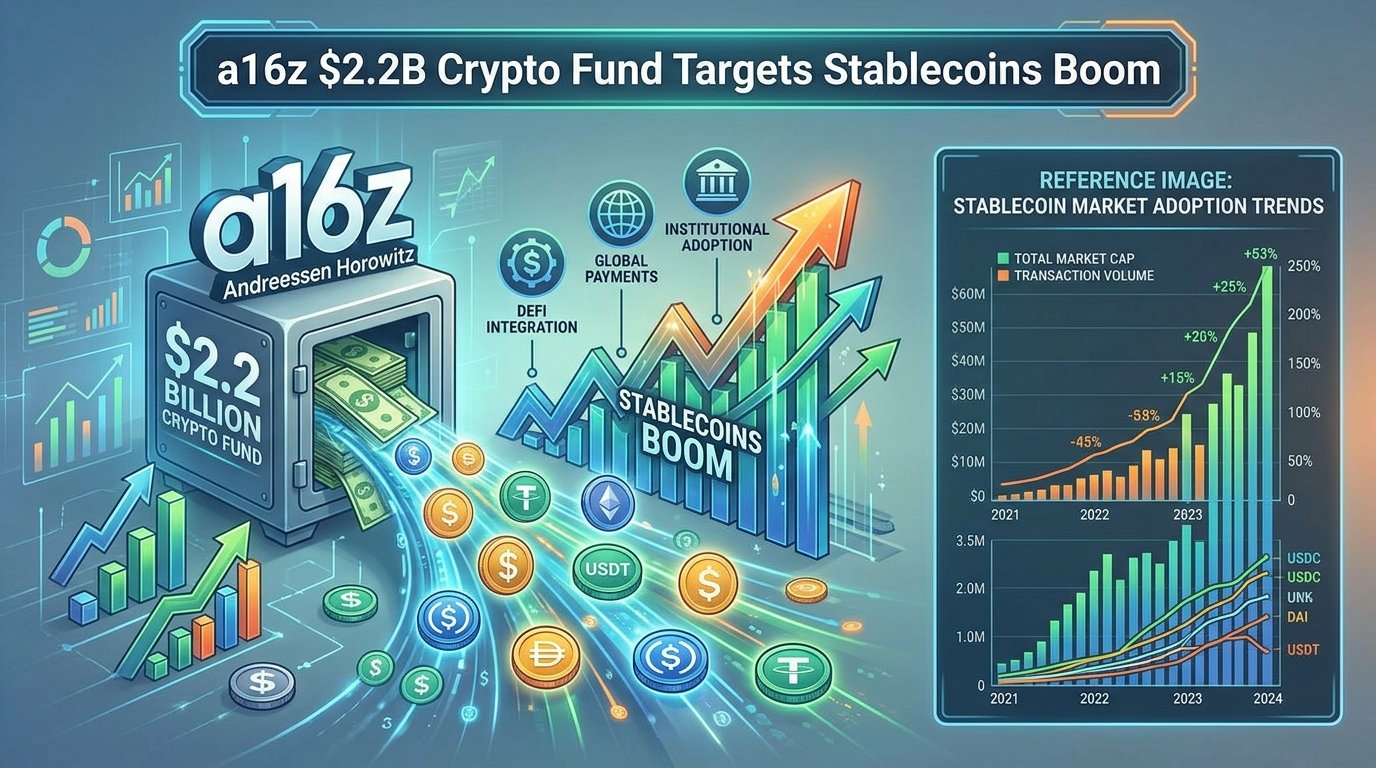
    The crypto industry is changing fast. It is moving beyond speculation and focusing on real-world use. At the center of this shift is Andreessen Horowitz (a16z). The firm has launched a $2.2 billion crypto fund to support stablecoins and tokenized assets.

    This move shows a clear direction. a16z wants to back projects that people can actually use. The focus is no longer on hype. Instead, it is on building financial tools powered by blockchain.

    The timing also matters. The market is recovering, and investors are looking for real value. a16z is stepping in with a strong belief that crypto will shape the future of finance.

    The Vision Behind a16z’s $2.2B Crypto Fund

    The decision by a16z to launch a $2.2B crypto fund reflects a long-term belief that blockchain technology will underpin the next generation of the internet, often referred to as Web3. Rather than chasing short-term market trends, the firm is investing in infrastructure and foundational technologies that enable sustainable growth.

    This fund is designed to support startups and developers working on projects that bring practical value to users. The focus is on building systems that allow seamless digital transactions, decentralized ownership, and financial automation. By prioritizing these areas, a16z is aligning itself with the idea that crypto’s true potential lies in solving real-world problems, not just enabling trading activity.

    The vision extends beyond finance into a broader digital ecosystem where blockchain supports identity systems, governance models, and digital ownership. However, financial use cases remain the most immediate and impactful, which is why stablecoins and tokenized assets are at the core of this investment strategy.

    Why Stablecoins Are Central to the Strategy

    Stablecoins have emerged as one of the most important innovations in the crypto space. Unlike traditional cryptocurrencies, their value is pegged to stable assets such as fiat currencies, making them less volatile and more practical for everyday use. a16z’s strong focus on stablecoins reflects their growing importance as a bridge between traditional finance and blockchain technology.

    These digital currencies are increasingly being used for cross-border payments, remittances, and online transactions, offering faster and cheaper alternatives to traditional banking systems. In many parts of the world, stablecoins provide access to financial services for people who are underserved by conventional institutions.

    Another key advantage of stablecoins is their programmability. Because they operate on blockchain networks, they can be integrated into smart contracts, enabling automated financial processes. This opens the door to innovations such as instant settlements, automated lending, and decentralized payment systems. As a result, stablecoins are becoming the backbone of what many describe as on-chain finance, a new paradigm where financial activities are executed entirely on blockchain networks.

    Tokenized Assets: Bridging Traditional Finance and Blockchain

    In addition to stablecoins, the a16z crypto fund places significant emphasis on tokenized assets, which represent real-world assets on a blockchain. This concept has the potential to revolutionize how assets are owned, traded, and managed.

    Tokenization allows assets such as real estate, stocks, and commodities to be divided into smaller digital units, enabling fractional ownership. This makes investment opportunities more accessible to a broader audience, breaking down barriers that have traditionally limited participation in financial markets.

    Furthermore, tokenized assets can be traded on blockchain platforms with greater efficiency, reducing the need for intermediaries and lowering transaction costs. Settlements that once took days can now occur almost instantly, improving liquidity and market accessibility.

    By investing in this area, a16z is supporting the development of a financial system where traditional and digital assets coexist seamlessly. The long-term vision is a global, interoperable marketplace where assets can be traded freely and efficiently across borders.

    Beyond Speculation: A Shift Toward Real Utility

    The End of Hype-Driven Crypto Cycles

    One of the most notable aspects of the a16z crypto fund is its focus on real-world utility. The crypto industry has often been criticized for its reliance on speculative trading and hype-driven projects. However, this new wave of investment signals a clear shift toward building technologies that deliver tangible value.a16z $2.2B Crypto Fund for Stablecoins

    Developers are now concentrating on creating applications that solve real problems, such as improving payment systems, enhancing financial inclusion, and enabling new forms of digital ownership. This transition marks a critical turning point for the industry, as it moves from experimentation to practical implementation.

    a16z’s approach reflects the belief that long-term success in crypto will depend on user adoption and product-market fit, rather than short-term price movements. By supporting projects that prioritize usability and scalability, the firm is helping to lay the groundwork for a more sustainable ecosystem.

    Infrastructure as the New Frontier

    The fund prioritizes infrastructure-led applications, including:

    • Payment rails powered by stablecoins
    • Decentralized exchanges and derivatives platforms
    • Prediction markets
    • Blockchain-based identity systems

    These foundational technologies are expected to support a wide range of applications, from finance to gaming to artificial intelligence.

    The Role of Regulation in Crypto Growth

    Regulation has historically been a challenge for the crypto industry, but recent developments suggest a more favorable environment is emerging. Governments and regulatory bodies are increasingly recognizing the importance of blockchain technology and are working to establish clear frameworks for its use.

    For investors like a16z, regulatory clarity is essential. It provides the confidence needed to deploy large amounts of capital and supports the growth of compliant, trustworthy platforms. Clear regulations also help protect consumers and reduce the risks associated with fraud and market manipulation.

    As policies continue to evolve, the crypto industry is likely to see increased participation from institutional investors. This, in turn, will drive further innovation and adoption, reinforcing the importance of funds like the one launched by a16z.

    Competition with AI: Why Crypto Still Matters

    In recent years, artificial intelligence has attracted significant investment, often overshadowing other emerging technologies. Despite this trend, a16z’s decision to launch a $2.2B crypto fund demonstrates strong confidence in blockchain’s long-term potential.

    Rather than viewing AI as a competitor, many industry experts see it as a complementary technology. The integration of AI and blockchain could lead to powerful new applications, such as autonomous systems capable of conducting financial transactions using stablecoins.

    For example, AI-driven platforms could use blockchain networks to execute secure, transparent, and automated payments. This convergence has the potential to create entirely new economic models, further expanding the role of crypto in the digital economy.

    a16z’s Track Record in Crypto Investments

    a16z has played a significant role in shaping the crypto landscape through its early and strategic investments. The firm has backed major projects and platforms that have become integral to the ecosystem, reinforcing its reputation as a leading force in the industry.

    With each new fund, a16z refines its investment strategy, focusing on areas with the highest potential for impact. The $2.2B crypto fund continues this tradition, emphasizing infrastructure, stablecoins, and tokenization as key drivers of future growth.

    The firm’s influence extends beyond capital investment. It also provides guidance, resources, and support to startups, helping them navigate the complexities of building in the crypto space. This holistic approach increases the likelihood of success for the projects it supports.

    The Growing Importance of On-Chain Finance

    A New Financial Paradigm

    On-chain finance represents a fundamental shift in how financial services are delivered. Instead of relying on centralized institutions, these systems operate on decentralized networks, offering greater transparency and accessibility.

    Through the use of smart contracts, on-chain platforms can automate processes such as lending, borrowing, and trading. This reduces the need for intermediaries and lowers costs for users. Additionally, these systems are available 24/7, providing a level of convenience that traditional finance cannot match.

    a16z’s investment in this area highlights its belief that on-chain finance will become a core component of the global financial system. As more users adopt these platforms, the demand for stablecoins and tokenized assets is expected to grow.

    Challenges Facing the Crypto Ecosystem

    While the future of crypto looks promising, several challenges remain. Issues such as scalability, security, and user experience must be addressed to achieve widespread adoption. However, these challenges also present opportunities for innovation.

    Startups that can develop solutions to these problems are likely to attract significant investment and play a key role in shaping the industry’s future. The a16z crypto fund is well-positioned to support such initiatives, providing the resources needed to overcome these obstacles.

    At the same time, the growing interest from institutional investors suggests that the market is becoming more mature. This increased participation will help stabilize the industry and drive long-term growth.

    Conclusion

    The launch of a16z’s $2.2B crypto fund marks a pivotal moment in the evolution of the blockchain industry. By focusing on stablecoins, tokenized assets, and real-world applications, the firm is signaling a shift toward a more mature and utility-driven ecosystem.

    As regulatory clarity improves and technological advancements continue, the crypto industry is poised for sustained growth. a16z’s investment not only reinforces confidence in blockchain technology but also highlights its potential to reshape global finance.

    The future of crypto is no longer just about speculation—it’s about building a decentralized financial system that works for everyone.

    FAQs

    Q. What is a16z’s $2.2B crypto fund?

    It is a venture capital fund launched by Andreessen Horowitz to invest in blockchain startups, focusing on stablecoins, tokenized assets, and crypto infrastructure.

    Q. Why are stablecoins important?

    Stablecoins provide price stability and are widely used for payments, remittances, and decentralized finance, making them a key component of the crypto ecosystem.

    Q. What are tokenized assets?

    Tokenized assets are real-world assets represented as digital tokens on a blockchain, enabling fractional ownership and faster transactions.

    Q. How does this fund impact the crypto market?

    The fund brings significant institutional capital into the market, supporting innovation and accelerating the development of real-world crypto applications.

    Q. Is crypto still a good investment in 2026?

    While risks remain, the focus on infrastructure and real-world use cases suggests long-term growth potential, especially in areas like stablecoins and tokenization.

  • Solana Ecosystem Expands with Privacy Breakthrough

    Solana Ecosystem Expands with Privacy Breakthrough

    The blockchain industry is evolving at a rapid pace, with innovation driving new possibilities in scalability, interoperability, and security. Among the leading networks shaping this transformation, the Solana ecosystem has emerged as a powerhouse known for its high throughput and low transaction costs. Recently, a significant development has captured the attention of the crypto world: a new cross-chain privacy acquisition that promises to redefine how users interact with decentralized systems.

    This move is not just another addition to the growing list of blockchain partnerships. Instead, it signals a strategic shift toward enhancing privacy-focused interoperability, a critical need in today’s increasingly interconnected blockchain landscape. As decentralized finance (DeFi), NFTs, and Web3 applications continue to expand, the importance of secure and private cross-chain communication cannot be overstated.

    In this article, we explore how the Solana ecosystem expands through this acquisition, what it means for users and developers, and why it could be a turning point for the future of blockchain privacy.

    The Growth Trajectory of the Solana Ecosystem

    The Solana ecosystem expansion has been one of the most notable success stories in the blockchain space. Built to address the limitations of earlier networks, Solana offers unparalleled speed and efficiency, making it a preferred choice for developers building decentralized applications.

    Over the years, Solana has attracted a diverse range of projects, from DeFi platforms and NFT marketplaces to gaming and metaverse applications. Its unique consensus mechanism, combining Proof of History (PoH) with Proof of Stake (PoS), enables it to process thousands of transactions per second while maintaining low fees.

    This rapid growth has created a vibrant ecosystem that continues to push the boundaries of innovation. However, as the ecosystem expands, so do the challenges, particularly in areas such as data privacy, cross-chain communication, and secure asset transfers.

    Understanding Cross-Chain Privacy in Blockchain

    The Need for Privacy in a Transparent World

    Blockchain technology is inherently transparent, which is both a strength and a limitation. While transparency ensures trust and accountability, it can also expose sensitive transaction data. This is where cross-chain privacy solutions come into play.

    As users interact with multiple blockchain networks, the need for secure and private data exchange becomes critical. Cross-chain privacy enables users to move assets and data between chains without revealing unnecessary information, ensuring both security and confidentiality.

    How Cross-Chain Technology Works

    Cross-chain technology allows different blockchain networks to communicate with each other. This interoperability is essential for creating a seamless user experience in the decentralized world. However, traditional cross-chain solutions often lack robust privacy features, leaving users vulnerable to data exposure.

    By integrating advanced privacy-preserving protocols, blockchain networks can enhance their interoperability while safeguarding user data. This is precisely the gap that the latest acquisition within the Solana ecosystem aims to address.

    The Strategic Importance of the New Acquisition

    The recent cross-chain privacy acquisition marks a pivotal moment in the Solana ecosystem expansion. By bringing in cutting-edge privacy technology, Solana is positioning itself as a leader in secure blockchain interoperability.

    This acquisition is expected to introduce advanced cryptographic techniques such as zero-knowledge proofs, enabling users to verify transactions without revealing underlying data. Such innovations are crucial for building trust in decentralized systems, especially as they become more integrated into mainstream applications.

    Moreover, this move reflects a broader trend in the blockchain industry, where privacy is becoming a top priority alongside scalability and usability. By addressing this need, Solana is not only enhancing its ecosystem but also setting new standards for the industry.

    Impact on Developers and Builders

    Enhanced Development Capabilities

    For developers, the Solana ecosystem expands in ways that open up new possibilities for building innovative applications. The integration of cross-chain privacy solutions allows developers to create dApps that offer both interoperability and data protection.

    This is particularly for sectors like DeFi, where users require secure and private financial transactions. With enhanced privacy features, developers can design platforms that meet regulatory requirements while maintaining user trust.

    New Opportunities for Innovation

    The addition of privacy-focused technology also encourages experimentation. Developers can explore new use cases, such as private NFTs, confidential smart contracts, and secure identity management systems.

    These innovations have the potential to attract a broader audience to the Solana ecosystem, further accelerating its growth and adoption.

    Benefits for Users and Investors

    Improved Security and Privacy

    One of the most significant advantages of this acquisition is the improvement in user privacy and security. By enabling private cross-chain transactions, users can interact with multiple networks without exposing sensitive information.

    This is especially important in an era where data breaches and cyber threats are on the rise. Enhanced privacy features provide users with greater control over their data, fostering confidence in decentralized platforms.

    Increased Utility and Accessibility

    As the Solana ecosystem expands, users benefit from a more interconnected and accessible blockchain environment. Cross-chain functionality allows users to access a wider range of services and assets without the need for complex processes.

    This seamless experience is crucial for driving mass adoption, as it reduces barriers to entry and makes blockchain technology more user-friendly.

    The Role of Privacy in DeFi and Web3
    Role of Privacy in DeFi and Web3

    Transforming Decentralized Finance

    Privacy is a critical component of the next generation of DeFi platforms. As financial transactions move onto blockchain networks, users demand the same level of confidentiality they expect from traditional financial systems.

    The integration of cross-chain privacy solutions within the Solana ecosystem enables the development of confidential DeFi applications, where transaction details remain secure while still being verifiable.

    Strengthening Web3 Infrastructure

    In the broader context of Web3, privacy plays a vital role in building a decentralized internet that respects user rights. From digital identity to data ownership, privacy-focused solutions are essential for creating a fair and secure online ecosystem.

    By investing in cross-chain privacy technology, Solana is contributing to the foundation of a more secure and user-centric Web3 environment.

    Competitive Advantage in the Blockchain Market

    The blockchain space is highly competitive, with numerous networks vying for dominance. The Solana ecosystem expansion through this acquisition gives it a distinct edge over competitors.

    While many blockchains focus primarily on scalability or decentralization, Solana is taking a more holistic approach by incorporating privacy, interoperability, and performance. This combination makes it an attractive option for both developers and users.

    Furthermore, the ability to offer secure cross-chain interactions positions Solana as a key player in the future of multi-chain ecosystems.

    Challenges and Considerations

    Technical Complexity

    Implementing cross-chain privacy solutions is not without its challenges. The integration of advanced cryptographic techniques requires careful planning and execution to ensure efficiency and security.

    However, Solana’s track record of innovation suggests that it is well-equipped to handle these complexities and deliver robust solutions.

    Regulatory Implications

    Privacy in blockchain often raises regulatory concerns, particularly in areas related to compliance and anti-money laundering (AML) requirements. Striking the right balance between privacy and transparency will be crucial for the success of this initiative.

    By adopting responsible practices, the Solana ecosystem can navigate these challenges while maintaining its commitment to user privacy.

    Future Outlook for the Solana Ecosystem

    The future looks promising as the Solana ecosystem expands with this new cross-chain privacy acquisition. This development is likely to attract more developers, investors, and users, further strengthening its position in the blockchain industry.

    As privacy becomes a key differentiator, Solana’s proactive approach could set a precedent for other networks to follow. The continued evolution of blockchain interoperability, secure transactions, and decentralized applications will shape the next phase of growth for the ecosystem.

    Conclusion

    The announcement that the Solana ecosystem expands with a new cross-chain privacy acquisition represents a significant milestone in the evolution of blockchain technology. By addressing the critical need for privacy in an increasingly interconnected digital landscape, Solana is positioning itself as a leader in the next generation of decentralized systems.

    This strategic move not only enhances the functionality and security of the ecosystem but also opens up new opportunities for innovation and adoption. As the blockchain industry continues to evolve, the integration of privacy-focused interoperability will play a crucial role in shaping its future.

    For developers, users, and investors alike, this development signals a new era of possibilities within the Solana ecosystem—one where scalability, security, and privacy coexist to create a truly transformative digital experience.

    FAQs

    Q. What does the cross-chain privacy acquisition mean for the Solana ecosystem?

    The acquisition enhances Solana’s ability to support secure and private interactions between different blockchain networks, improving overall functionality and user trust.

    Q. How does cross-chain privacy benefit users?

    It allows users to transfer assets and data across blockchains without exposing sensitive information, ensuring better security and confidentiality.

    Q. Why is privacy important in blockchain technology?

    Privacy protects user data, prevents exploitation, and enables secure transactions, especially in financial and identity-based applications.

    Q. Will this acquisition impact DeFi on Solana?

    Yes, it will enable the development of more secure and confidential DeFi platforms, attracting more users and increasing adoption.

    Q. What is the future of the Solana ecosystem after this expansion?

    The ecosystem is expected to grow further, with increased innovation, improved interoperability, and stronger adoption across Web3 applications.

  • Coinbase Opens BILL-USD Trading for Billions

    Coinbase Opens BILL-USD Trading for Billions

    The cryptocurrency market continues to evolve at a rapid pace, with new developments shaping investor sentiment, liquidity, and long-term adoption. One of the latest milestones capturing attention across the digital asset ecosystem is the announcement that Coinbase will open BILL-USD spot trading for the Billions token. This move signals not only a significant expansion for the token itself but also highlights the growing importance of regulated exchanges in fostering trust and accessibility in crypto markets.

    As one of the world’s leading cryptocurrency exchanges, Coinbase plays a crucial role in onboarding both retail and institutional investors. When a new trading pair is introduced—especially one denominated in USD—it often leads to increased liquidity, heightened visibility, and broader adoption. The addition of BILL-USD spot trading represents a strategic step for the Billions token, positioning it for potential growth in a competitive market.

    This article explores the implications of Coinbase’s decision, the fundamentals of the Billions token, and how this development may influence traders, investors, and the broader crypto ecosystem. By examining the market impact, liquidity dynamics, and future outlook, we can better understand why this announcement matters.

    Understanding the Billions Token and Its Ecosystem

    The Billions token has steadily gained traction within the cryptocurrency space, emerging as a project focused on innovation, scalability, and real-world utility. Unlike many speculative assets, the token is designed to support a broader ecosystem that may include decentralized applications, financial services, or digital infrastructure solutions.

    At its core, the Billions token aims to address challenges related to transaction efficiency, network scalability, and user accessibility. These features are essential in a market where users increasingly demand faster and cheaper transactions without compromising security. By leveraging modern blockchain architecture, the project positions itself as a competitive player among emerging digital assets.

    The introduction of BILL-USD spot trading on a major exchange adds credibility to the token. It signals that the asset has met certain listing standards, which often include technical reliability, compliance considerations, and market demand. This validation can significantly influence investor confidence and encourage broader participation.

    Coinbase’s Role in Expanding Crypto Adoption

    Coinbase has long been recognized as a gateway for mainstream adoption of cryptocurrencies. Its user-friendly interface, regulatory compliance, and strong reputation make it a preferred platform for both beginners and experienced traders. When Coinbase lists a new asset or trading pair, it often triggers a ripple effect across the market.

    The launch of Coinbase BILL-USD trading is particularly significant because USD-denominated pairs are widely accessible. They allow users to trade directly against fiat currency rather than relying on intermediary cryptocurrencies. This simplifies the trading process and reduces barriers for new entrants.

    Moreover, Coinbase’s listings are often seen as a form of endorsement. While not an explicit guarantee of success, inclusion on the platform suggests that the asset has undergone a degree of scrutiny. This perception can drive increased trading volume and attract institutional interest.

    What Is BILL-USD Spot Trading?

    The Mechanics of Spot Trading

    Spot trading refers to the direct buying and selling of an asset at its current market price. In the case of BILL-USD spot trading, users can purchase or sell the Billions token using US dollars in real time. This contrasts with derivatives trading, where contracts are based on the future price of an asset.

    Spot trading is generally considered more straightforward and less risky than leveraged trading. It allows investors to hold the actual asset rather than speculate on price movements through complex instruments. This simplicity makes it an ideal entry point for new traders.

    Why USD Pairs Matter

    The introduction of a USD trading pair is a crucial milestone for any cryptocurrency. It enhances liquidity by connecting the asset directly to one of the world’s most widely used currencies. This increased liquidity can lead to tighter spreads, more efficient price discovery, and reduced volatility over time.

    For the Billions token, the availability of BILL-USD spot trading on Coinbase means greater accessibility for a global audience. It eliminates the need for users to convert funds into other cryptocurrencies before trading, thereby streamlining the process.

    Market Impact of Coinbase BILL-USD Trading

    Increased Liquidity and Trading Volume

    One of the immediate effects of listing a new trading pair on a major exchange is a surge in liquidity. With more buyers and sellers entering the market, trading activity tends to increase significantly. This can lead to more stable pricing and reduced slippage for large transactions.

    The launch of Coinbase BILL-USD trading is expected to attract both retail and institutional investors. Retail traders benefit from easy access and a trusted platform, while institutions may view the listing as an opportunity to diversify their portfolios with a promising asset.

    Price Discovery and Volatility

    New listings often lead to heightened volatility in the short term as the market adjusts to increased demand. Prices may experience sharp movements as traders react to the news and attempt to capitalize on early opportunities.

    However, over time, the presence of a liquid USD market can contribute to more efficient price discovery. This helps the asset find a fair value based on supply and demand rather than speculative hype alone.

    Strategic Benefits for the Billions Token

    Benefits for the Billions Token

    Enhanced Visibility and Credibility

    Being listed on a platform like Coinbase significantly boosts the visibility of any cryptocurrency. The Billions token is likely to gain exposure to millions of users who may not have previously encountered it.

    This increased visibility can lead to greater adoption, as more users explore the token’s use cases and potential benefits. Additionally, the association with a reputable exchange enhances the project’s credibility in the eyes of investors.

    Broader Market Participation

    The introduction of BILL-USD spot trading opens the door to a wider audience, including users who prefer trading directly with fiat currency. This inclusivity is essential for driving long-term growth and establishing a sustainable user base.

    As more participants enter the market, the token’s ecosystem may expand, leading to increased development activity and new applications.

    How Traders Can Approach BILL-USD Trading

    Evaluating Market Conditions

    Before engaging in Coinbase BILL-USD trading, traders should assess current market conditions. Factors such as overall crypto sentiment, Bitcoin price trends, and macroeconomic developments can influence the performance of newly listed assets.

    Understanding these dynamics can help traders make informed decisions and manage risk effectively.

    Risk Management Strategies

    While new listings can present lucrative opportunities, they also come with risks. Price volatility can lead to rapid gains or losses, making it essential for traders to implement risk management strategies.

    Setting stop-loss orders, diversifying investments, and avoiding excessive leverage are key practices for navigating the market safely. By approaching BILL-USD spot trading with caution, traders can maximize potential rewards while minimizing downside risk.

    The Broader Implications for the Crypto Industry

    Strengthening the Role of Regulated Exchanges

    The addition of new trading pairs on regulated platforms like Coinbase reinforces the importance of compliance and transparency in the crypto industry. As regulators continue to shape the landscape, exchanges that prioritize these factors are likely to gain a competitive edge.

    The launch of Coinbase BILL-USD trading reflects a broader trend toward integrating cryptocurrencies into mainstream financial systems.

    Encouraging Innovation and Competition

    New listings also encourage innovation by providing projects with greater access to capital and user bases. This can lead to the development of new features, partnerships, and use cases, ultimately benefiting the entire ecosystem.

    For the Billions token, increased exposure may accelerate its growth and inspire further advancements within its network.

    Future Outlook for BILL-USD Trading

    Potential Growth Trajectory

    The long-term success of BILL-USD spot trading on Coinbase will depend on several factors, including the token’s utility, market demand, and ongoing development efforts. If the project continues to deliver value, it could establish itself as a significant player in the crypto market.

    Investor sentiment will also play a crucial role, as positive developments and strong community support can drive sustained growth.

    Challenges to Consider

    Despite the opportunities, challenges remain. The cryptocurrency market is highly competitive, with new projects emerging regularly. Maintaining relevance requires continuous innovation and adaptation.

    Additionally, regulatory developments could impact trading conditions, making it essential for both the project and investors to stay informed.

    Conclusion

    The announcement that Coinbase will open BILL-USD spot trading for the Billions token marks a significant milestone in the token’s journey. By providing direct access to USD trading, the move enhances liquidity, improves accessibility, and boosts credibility.

    For traders and investors, this development presents both opportunities and challenges. While increased volatility may create short-term trading prospects, long-term success will depend on the token’s fundamentals and market adoption.

    As the cryptocurrency industry continues to evolve, initiatives like Coinbase BILL-USD trading highlight the growing integration of digital assets into mainstream finance. Whether you are a seasoned investor or a newcomer, keeping an eye on such developments can provide valuable insights into the future of the market.

  • Litecoin Pumps After MWEB Fix Sparks Rally

    Litecoin Pumps After MWEB Fix Sparks Rally

    The cryptocurrency market thrives on momentum, innovation, and—perhaps most critically—trust. When confidence in a blockchain network wavers, even briefly, the consequences can ripple across price action, investor sentiment, and long-term adoption. Recently, Litecoin found itself at the center of attention after resolving a critical issue related to its MimbleWimble Extension Blocks (MWEB). As news of the fix spread, a renewed wave of optimism pushed prices higher, leading to what many analysts now describe as a significant bullish breakout.

    The phrase “Litecoin pumps after MWEB exploit resolution” has quickly gained traction across crypto discussions, reflecting both relief and renewed enthusiasm among investors. This development highlights not only Litecoin’s resilience but also the importance of transparency and rapid response in the ever-evolving world of digital assets. In this article, we will explore the details behind the MWEB exploit, how its resolution triggered a rally, and what this means for Litecoin’s future trajectory.

    Understanding Litecoin and Its Market Position

    Litecoin has long been considered one of the most reliable and established cryptocurrencies in the market. Often referred to as the “silver to Bitcoin’s gold,” it was designed to offer faster transaction speeds and lower fees. Over the years, Litecoin has maintained a solid reputation as a peer-to-peer digital currency with consistent network performance.

    The introduction of MimbleWimble Extension Blocks (MWEB) marked a major milestone for Litecoin. This upgrade aimed to enhance privacy, scalability, and fungibility, allowing users to conduct confidential transactions while maintaining the network’s efficiency. However, with innovation comes risk, and the MWEB feature soon faced scrutiny due to a potential exploit.

    Despite this challenge, Litecoin’s ability to recover swiftly has reinforced its standing as a dependable blockchain project. The recent surge shows that the market still places significant trust in its long-term viability.

    What Was the MWEB Exploit?

    The Technical Concern Behind MWEB

    The MWEB upgrade introduced advanced privacy features, enabling transactions to be obscured from public view. While this innovation attracted privacy-focused users, it also opened the door to potential vulnerabilities. The exploit in question was not necessarily a catastrophic breach but rather a technical loophole that could have been abused under specific conditions.

    Developers identified irregularities related to transaction validation within the MWEB structure. These issues raised concerns about the integrity of certain transactions and the possibility of unintended behavior within the system. Although no large-scale damage was reported, the mere existence of such a flaw was enough to shake confidence temporarily.

    Market Reaction to the Exploit News

    When news of the exploit surfaced, Litecoin experienced short-term volatility. Traders reacted cautiously, and some investors reduced exposure, fearing further complications. This response is typical in the crypto space, where security concerns often lead to immediate price corrections.

    However, the situation did not escalate into a full-blown crisis. The Litecoin development team acted quickly, demonstrating strong network governance and technical expertise. Their prompt response played a crucial role in limiting negative sentiment.

    Swift Resolution and Market Recovery

    Developer Response and Fix Implementation

    The Litecoin team moved decisively to address the MWEB exploit. By conducting thorough audits and implementing necessary fixes, they ensured that the vulnerability was eliminated without compromising the network’s core functionality. This proactive approach highlighted the importance of blockchain security and continuous improvement.

    Transparency was another key factor. Developers communicated openly with the community, providing updates and reassurance throughout the process. This level of engagement helped rebuild trust and set the stage for a market rebound.

    Litecoin Pumps After MWEB Exploit Resolution

    Once the fix was confirmed and confidence restored, Litecoin began to rally. The phrase “Litecoin pumps after MWEB exploit resolution” became a reflection of renewed investor optimism. Traders who had previously stepped back started re-entering the market, driving demand and pushing prices upward.

    The recovery was not merely technical; it was psychological. Investors interpreted the successful resolution as proof of Litecoin’s resilience and reliability. As a result, buying pressure increased, leading to a sustained upward trend.

    Factors Driving the Litecoin Price Surge
    Factors Driving the Litecoin Price Surge

    Renewed Investor Confidence

    One of the primary drivers behind the rally was the restoration of trust. In the cryptocurrency market, perception often carries as much weight as fundamentals. By resolving the exploit efficiently, Litecoin demonstrated its commitment to security and innovation.

    This renewed confidence attracted both retail and institutional investors. Many viewed the dip caused by the exploit as a buying opportunity, leading to increased trading volume and price momentum.

    Broader Market Trends

    The broader crypto market also played a role in Litecoin’s surge. When major cryptocurrencies experience bullish trends, altcoins like Litecoin often follow suit. The combination of positive market sentiment and Litecoin-specific developments created a perfect environment for growth.

    Additionally, increased interest in privacy-focused cryptocurrencies contributed to Litecoin’s appeal. The MWEB upgrade, despite its initial challenges, positioned Litecoin as a strong contender in this niche.

    Technical Breakout Patterns

    From a technical analysis perspective, Litecoin’s price movement showed clear signs of a breakout. Resistance levels that had previously capped growth were surpassed, triggering a wave of bullish momentum. Traders who rely on chart patterns identified this as a strong signal to enter the market.

    The phrase “Litecoin pumps after MWEB exploit resolution” aligns with these technical indicators, as the resolution acted as a catalyst for the breakout.

    The Role of MWEB in Litecoin’s Future

    Enhancing Privacy and Fungibility

    The MWEB upgrade remains a significant advancement for Litecoin. By enabling confidential transactions, it enhances the network’s fungibility, ensuring that each unit of Litecoin is interchangeable and free from transaction history biases.

    This feature is particularly important in a world where privacy concerns are growing. Users increasingly seek ways to protect their financial data, and Litecoin’s MWEB capability addresses this demand effectively.

    Balancing Innovation and Security

    While the exploit highlighted potential risks, it also underscored the importance of balancing innovation with security. The Litecoin team’s ability to resolve the issue demonstrates that progress does not have to come at the expense of safety.

    Moving forward, continued audits and updates will be essential to maintaining confidence in the MWEB system. The successful resolution sets a precedent for how future challenges can be handled.

    Market Sentiment and Community Response

    Community Trust Rebuilt

    The Litecoin community responded positively to the exploit resolution. Social media discussions shifted from concern to optimism, with many users praising the development team’s swift action. This shift in sentiment played a crucial role in driving the price rally.

    Community support is a powerful force in the crypto market. When users believe in a project, they are more likely to hold, invest, and promote it. The phrase “Litecoin pumps after MWEB exploit resolution” reflects this collective confidence.

    Increased Media Attention

    The event also attracted significant media coverage, bringing Litecoin back into the spotlight. Increased visibility often leads to higher interest from new investors, further fueling price growth.

    This renewed attention may have long-term benefits, as it introduces Litecoin to a broader audience and reinforces its relevance in the competitive crypto landscape.

    Risks and Challenges Ahead

    Regulatory Concerns

    Privacy features like MWEB can attract regulatory scrutiny. Governments and financial authorities often express concerns about technologies that obscure transaction details. While Litecoin aims to provide legitimate privacy, it must navigate these regulatory challenges carefully.

    Market Volatility

    Despite the recent rally, the cryptocurrency market remains inherently volatile. Price corrections are inevitable, and investors should remain cautious. The phrase “Litecoin pumps after MWEB exploit resolution” captures a moment in time, but long-term stability will depend on broader market conditions.

    Ongoing Development Needs

    Continuous improvement is essential for maintaining competitiveness. Litecoin must keep evolving to stay relevant in a rapidly changing market. This includes enhancing security, expanding use cases, and fostering adoption.

    Future Outlook for Litecoin

    The successful resolution of the MWEB exploit has positioned Litecoin for potential growth. With renewed confidence, strong fundamentals, and increasing adoption, the cryptocurrency appears well-equipped to navigate future challenges.

    Analysts suggest that if Litecoin continues to build on its recent momentum, it could achieve higher price levels in the coming months. The phrase “Litecoin pumps after MWEB exploit resolution” may mark the beginning of a new chapter for the asset.

    However, sustained growth will require consistent performance, community engagement, and adaptability. By addressing these factors, Litecoin can solidify its place as a leading cryptocurrency.

    Conclusion

    The recent surge in Litecoin’s price highlights the importance of trust, transparency, and resilience in the cryptocurrency market. The phrase “Litecoin pumps after MWEB exploit resolution” encapsulates a turning point where uncertainty gave way to renewed confidence.

    By swiftly addressing the exploit and maintaining open communication, the Litecoin team demonstrated strong leadership and technical capability. This not only restored investor trust but also triggered a significant market rally.

    As Litecoin moves forward, its ability to balance innovation with security will be crucial. The MWEB upgrade, despite its challenges, represents a step toward a more private and efficient financial system. If the network continues to evolve and adapt, it has the potential to remain a key player in the crypto space.

    FAQs

    Q. What caused Litecoin to pump recently?

    Litecoin experienced a price surge after successfully resolving the MWEB exploit, which restored investor confidence and triggered increased buying activity.

    Q. What is the MWEB upgrade in Litecoin?

    MWEB, or MimbleWimble Extension Blocks, is a feature designed to enhance privacy, scalability, and fungibility in Litecoin transactions.

    Q. Was the MWEB exploit dangerous?

    The exploit was a technical vulnerability rather than a major breach. It raised concerns but was quickly addressed without significant damage.

    Q. Why is privacy important in cryptocurrencies?

    Privacy ensures that transaction details remain confidential, protecting users’ financial information and enhancing fungibility.

    Q. What is Litecoin’s future outlook after this event?

    Litecoin’s future looks promising due to renewed confidence, strong fundamentals, and continued development, though market volatility and regulatory factors remain important considerations.

  • Ethereum Near $2.4K as Supply Tightens

    Ethereum Near $2.4K as Supply Tightens

    The cryptocurrency market is witnessing another pivotal moment as Ethereum edges closer to the $2,400 level, fueled by a notable decline in exchange reserves. This development has sparked renewed optimism among investors, as tightening supply dynamics often precede significant price movements. The phrase Ethereum presses $2.4K as exchange reserves tighten is now gaining traction across the crypto community, reflecting a shift in both market structure and investor behavior.

    Unlike previous rallies driven purely by speculation, this movement is supported by on-chain fundamentals. As more Ethereum is withdrawn from centralized exchanges and moved into private wallets or staking protocols, the available supply for immediate selling decreases. This creates a scarcity effect that can push prices higher when demand remains strong.

    In this article, we explore the reasons behind Ethereum’s climb toward $2.4K, the significance of declining exchange reserves, key technical signals, and what this trend could mean for the future of ETH.

    Ethereum’s Push Toward $2.4K

    A Critical Resistance Level

    As Ethereum presses $2.4K, it approaches a key resistance zone that has historically acted as a barrier to further gains. Breaking above this level would signal strong bullish momentum and could open the door to higher price targets.

    Psychologically, round numbers like $2,400 often attract attention from traders and investors. When Ethereum nears such levels, trading activity typically increases, leading to heightened volatility and potential breakout opportunities.

    Gradual Climb Supported by Demand

    Ethereum’s recent price movement has been characterized by a steady upward trend rather than sudden spikes. This gradual climb suggests healthy market conditions, where demand is consistently absorbing supply.

    The sustained interest in Ethereum reflects confidence in its long-term value, particularly given its central role in decentralized finance and blockchain innovation.

    Exchange Reserves and Their Impact

    What Are Exchange Reserves?

    Exchange reserves refer to the amount of Ethereum held on centralized exchanges. These reserves are important because they represent the supply readily available for trading or selling.

    When exchange reserves decline, it typically indicates that investors are moving their assets off exchanges, often for long-term holding or staking purposes.

    Tightening Supply Dynamics

    The current trend shows a significant drop in Ethereum exchange reserves. This tightening supply creates a bullish environment, as fewer coins are available for immediate sale.

    When demand remains steady or increases, this reduced supply can lead to upward price pressure. The concept is simple: scarcity drives value.

    Shift Toward Long-Term Holding

    The decline in reserves also reflects a shift in investor mindset. Instead of actively trading, many participants are choosing to hold Ethereum for the long term. This behavior reduces market volatility and supports sustained price growth.

    The Role of Staking and DeFi

    Ethereum Staking Reduces Circulating Supply

    One of the major factors contributing to declining exchange reserves is Ethereum staking. With the network’s transition to proof-of-stake, users can lock their ETH to earn rewards.

    This process removes coins from circulation, further tightening supply and reinforcing the bullish narrative.

    Growth of Decentralized Finance

    Ethereum remains the backbone of the DeFi ecosystem. As more projects and users rely on Ethereum-based platforms, demand for ETH continues to rise.

    This growing utility strengthens Ethereum’s value proposition and supports its upward price trajectory.

    Technical Analysis and Market Indicators
    Technical Analysis and Market Indicators

    Bullish Trend Formation

    Ethereum’s price action shows a clear bullish structure, with higher highs and higher lows. This pattern indicates strong buying pressure and a healthy uptrend.

    As Ethereum presses $2.4K, maintaining this structure will be crucial for sustaining momentum.

    Volume and Momentum Signals

    Trading volume has increased alongside the price rise, confirming the strength of the move. Momentum indicators suggest that buyers are in control, although some caution is warranted as the market approaches resistance.

    If Ethereum breaks above $2.4K with strong volume, it could trigger further gains toward $2,600 and beyond.

    Market Sentiment and Investor Behavior

    Growing Confidence in Ethereum

    Investor sentiment around Ethereum has improved significantly. The combination of strong fundamentals, reduced supply, and increasing adoption has created a positive outlook.

    This confidence is reflected in both retail and institutional participation, contributing to the ongoing rally.

    Reduced Selling Pressure

    With fewer coins available on exchanges, selling pressure decreases. This creates a more stable market environment, where price increases are more sustainable.

    Risks and Potential Challenges

    Resistance and Possible Rejection

    While the outlook is bullish, the $2.4K level remains a significant resistance point. Failure to break above it could result in a temporary pullback.

    Market-Wide Volatility

    Ethereum’s performance is closely tied to the broader crypto market. Any downturn in Bitcoin or global financial markets could impact ETH’s price.

    Overheating Indicators

    If momentum becomes too strong, the market may enter overbought conditions. This could lead to short-term corrections before the next upward move.

    Future Outlook for Ethereum

    Bullish Scenario

    If Ethereum successfully breaks above $2.4K, it could target higher levels such as $2,600 and $2,800. Continued decline in exchange reserves and strong demand would support this scenario.

    Bearish Scenario

    On the downside, failure to hold current levels could lead to a retracement toward $2,200 or lower. However, strong fundamentals may limit the extent of any correction.

    Long-Term Perspective

    In the long term, Ethereum’s growth will depend on adoption, network upgrades, and its role in the evolving digital economy. The current supply dynamics suggest a strong foundation for future gains.

    Conclusion

    The development where Ethereum presses $2.4K as exchange reserves tighten highlights the importance of on-chain fundamentals in driving price movements. The decline in available supply, combined with strong demand and growing adoption, has created a favorable environment for Ethereum.

    While challenges remain, the overall outlook appears bullish. As Ethereum continues to evolve, its ability to sustain momentum will depend on both market conditions and its expanding ecosystem.

    FAQs

    Q. What does it mean when exchange reserves tighten?

    It means fewer coins are available on exchanges, reducing selling pressure and potentially increasing prices.

    Q. Why is Ethereum approaching $2.4K important?

    It is a key resistance level that could determine the next phase of price movement.

    Q. How does staking affect Ethereum’s price?

    Staking locks up ETH, reducing circulating supply and supporting price growth.

    Q. Is Ethereum’s rally sustainable?

    It depends on demand, market conditions, and whether key resistance levels are broken.

    Q. What levels should investors watch next?

    Key levels include $2.4K resistance and support around $2.2K.

  • Grok AI Predicts Crypto Prices

    Grok AI Predicts Crypto Prices

    The intersection of artificial intelligence and cryptocurrency continues to generate intense interest, especially when influential figures like Elon Musk are involved. Recently, his AI chatbot Grok has made headlines with bold forecasts for major cryptocurrencies, sparking widespread debate across the digital asset community.

    According to the latest projections, Grok AI has outlined potential price ranges for Bitcoin, Ethereum, and XRP by the end of May 2026. These predictions suggest continued bullish momentum, but they also raise important questions about the reliability of AI-driven forecasts in highly volatile markets.

    As traders and investors seek new tools to navigate the crypto landscape, AI models like Grok are becoming increasingly influential. However, understanding the context, assumptions, and limitations behind these predictions is essential before drawing conclusions.

    Grok AI Price Predictions for May 2026

    Bitcoin Price Forecast

    Grok AI predicts that Bitcoin could reach a range between $88,000 and $95,000 by the end of May 2026.

    This projection reflects a continuation of Bitcoin’s bullish trend, supported by growing institutional adoption, macroeconomic tailwinds, and increasing demand for digital assets. The forecast suggests that Bitcoin may be entering another expansion phase following a period of consolidation.

    Ethereum Price Forecast

    For Ethereum, Grok AI estimates a price range of $2,500 to $2,800.

    This outlook highlights Ethereum’s steady growth trajectory, driven by its dominant role in decentralized finance (DeFi), smart contracts, and blockchain-based applications. The prediction implies that Ethereum could regain strong momentum as network activity increases.

    XRP Price Forecast

    Grok AI’s projection for XRP stands between $1.75 and $2.00, indicating a potential breakout from its current range.

    XRP’s forecast is particularly noteworthy because it suggests a significant upward move compared to its recent consolidation phase. This aligns with improving sentiment around Ripple’s ecosystem and its use in cross-border payments.

    How Grok AI Generates Predictions
    Grok AI Generates Predictions

    Data-Driven Analysis

    Grok AI operates as a large language model developed by xAI, designed to analyze vast amounts of data, including historical price trends, market sentiment, and macroeconomic indicators.

    By combining these inputs, the AI generates structured forecasts that attempt to identify potential future price movements.

    Pattern Recognition vs Real Prediction

    It is important to understand that AI models like Grok do not “predict” the future in a traditional sense. Instead, they rely on pattern recognition, identifying correlations and trends within historical data.

    This means that while the predictions may appear precise, they are based on probabilities rather than certainty. External factors such as regulatory changes, geopolitical events, or sudden market shifts can significantly alter outcomes.

    Market Factors Supporting the Predictions

    Bullish Crypto Market Structure

    The forecasts align with a broader bullish narrative in the cryptocurrency market. Increasing adoption, improved infrastructure, and growing institutional participation have created a supportive environment for digital assets.

    Institutional Demand

    Large investors continue to accumulate cryptocurrencies, particularly Bitcoin and Ethereum. This demand provides a strong foundation for price growth and reinforces the bullish outlook suggested by Grok AI.

    Expanding Use Cases

    Ethereum’s role in DeFi and XRP’s focus on cross-border payments highlight the growing utility of blockchain technology. These real-world applications contribute to long-term value and support price appreciation.

    Risks and Limitations of AI Predictions

    Market Volatility

    Cryptocurrency markets are highly volatile, and prices can change rapidly due to unexpected events. AI models may struggle to account for sudden shifts in sentiment or external shocks.

    Overreliance on Historical Data

    Since Grok AI relies heavily on past data, it may not fully capture new market dynamics or emerging trends. This limitation can affect the accuracy of its predictions.

    Hype vs Reality

    AI-generated forecasts often attract attention, but they should not be interpreted as guaranteed outcomes. Investors must approach such predictions with caution and conduct their own research.

    Long-Term Outlook Beyond May 2026

    While the short-term forecasts are optimistic, Grok AI has also suggested much higher long-term targets for cryptocurrencies. For example, Bitcoin could potentially reach significantly higher levels later in 2026 under favorable conditions.

    This indicates that the current predictions may represent just one phase of a larger market cycle.

    The Growing Influence of AI in Crypto

    AI as a Trading Tool

    AI is increasingly being used for market analysis, trading strategies, and risk management. Tools like Grok provide insights that can help investors make more informed decisions.

    Ethical and Practical Considerations

    However, the growing reliance on AI also raises concerns about misinformation and overconfidence in automated predictions. Experts warn that AI outputs should be interpreted carefully and not taken at face value.

    Conclusion

    The latest forecasts from Grok AI present a bullish outlook for Bitcoin, Ethereum, and XRP by the end of May 2026. With projected ranges of $88,000–$95,000 for Bitcoin, $2,500–$2,800 for Ethereum, and $1.75–$2.00 for XRP, the predictions suggest continued growth in the crypto market.

    However, it is crucial to remember that these projections are based on data-driven models and not guaranteed outcomes. While AI can provide valuable insights, it cannot fully predict the complexities of financial markets.

    As the crypto space continues to evolve, combining AI analysis with fundamental research and risk management will remain essential for navigating this dynamic environment.

    FAQs

    Q. What is Grok AI?

    Grok AI is a chatbot developed by xAI, designed to analyze data and generate insights, including cryptocurrency forecasts.

    Q. Are Grok AI predictions reliable?

    They are based on data and patterns but are not guaranteed. Market conditions can change rapidly.

    Q. Why is XRP expected to rise?

    Improving sentiment, utility in payments, and potential market breakouts contribute to its bullish outlook.

    Q. Can Bitcoin reach $95,000 soon?

    According to Grok AI, it is possible under favorable conditions, but it depends on market momentum.

    Q. Should investors rely on AI for trading decisions?

    AI can be helpful, but it should be used alongside personal research and risk management strategies.